Book Appointment Now

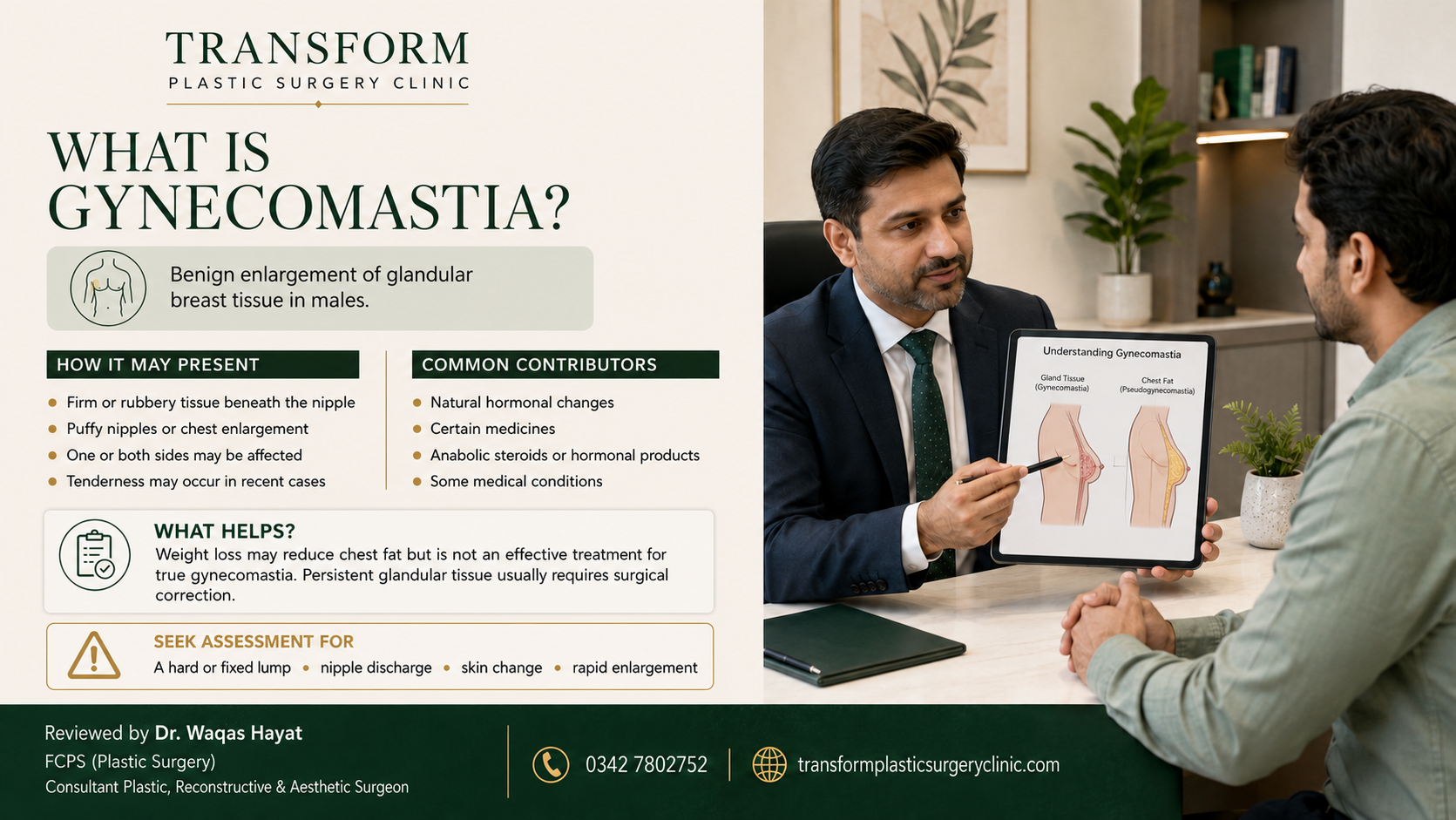
What Is Gynecomastia? Causes, Symptoms and Treatment Options
Gynecomastia is the benign enlargement of glandular breast tissue in males. It may affect one or both sides of the chest and can occur during infancy, puberty or adulthood.
The condition is usually related to a change in the balance or action of testosterone and estrogen. However, medicines, anabolic steroids and certain medical conditions can also contribute.
Gynecomastia is not usually dangerous, but a new or unusual breast lump should not automatically be assumed to be gynecomastia. A medical examination is important when the diagnosis is uncertain or warning signs are present.
Gynecomastia at a Glance
Gynecomastia is an increase in male breast gland tissue.
It may feel like a firm or rubbery disc beneath the nipple.
It can affect one or both sides, sometimes unevenly.
Pubertal gynecomastia often improves without treatment.
Weight loss can reduce chest fat but cannot reliably remove established glandular tissue.
Treatment depends on the cause, duration, symptoms and type of tissue present.
Persistent gynecomastia may be treated with liposuction, gland excision or a combination of both.
What Does Gynecomastia Look and Feel Like?
Gynecomastia commonly produces a rounded or puffy appearance around the nipple and areola. On examination, it may feel like a mobile, firm or rubbery area directly beneath the nipple.
Possible features include:
Enlargement of one or both breasts
Puffy or projecting nipples
Firm tissue beneath the areola
Tenderness or sensitivity, particularly in recent cases
Unequal enlargement of the two sides
Excess skin in more advanced cases
Chest fullness that persists despite exercise or weight loss
The degree of enlargement varies considerably. Some men have only a small area of tissue beneath the nipple, while others develop more extensive breast and skin enlargement.
Gynecomastia or Chest Fat: What Is the Difference?
Gynecomastia and excess chest fat are not exactly the same condition.
True gynecomastia involves growth of glandular breast tissue. It often feels firmer beneath the nipple.
Pseudogynecomastia is chest enlargement caused mainly by excess fat without significant glandular growth. It is more common in people who are overweight.
Many patients have a combination of fat and glandular tissue. Physical examination is usually the most useful first step in distinguishing between them. Ultrasound or other imaging is only required in selected cases.
Exercise and weight loss can reduce fatty chest enlargement. However, they do not reliably eliminate established glandular tissue.
What Causes Gynecomastia?
Gynecomastia develops when estrogen has a greater effect on breast tissue relative to testosterone. This does not necessarily mean that a man has abnormally high estrogen or low testosterone. The change may be temporary, age-related, medicine-related or associated with another health condition.
Natural Hormonal Changes
Gynecomastia commonly occurs during:
Infancy: Because of exposure to maternal hormones
Puberty: Due to temporary hormonal fluctuations
Older adulthood: As hormone levels, body composition and medicine use change
Pubertal gynecomastia often improves over approximately six months to two years. Persistent, painful or progressive enlargement should be assessed.
Medicines
Several medicines have been associated with gynecomastia. Examples include:
Spironolactone
Finasteride and dutasteride
Some treatments for prostate disease or prostate cancer
Certain anti-ulcer, antifungal, cardiac and psychiatric medicines
Some antiretroviral treatments
Hormonal medicines
Do not stop a prescribed medicine without consulting the clinician who prescribed it.
Anabolic Steroids and Hormonal Products
Anabolic steroids, unmonitored testosterone use and some bodybuilding products can disturb normal hormone regulation and cause or worsen gynecomastia.
Self-treatment with tamoxifen, aromatase inhibitors or other hormonal medicines can produce adverse effects and may delay the diagnosis of an underlying condition. These medicines should only be considered after proper medical assessment.
Medical Conditions
Less commonly, gynecomastia may be associated with:
Low testosterone
Thyroid disease
Liver or kidney disease
Testicular disorders
Malnutrition or major weight changes
Certain hormone-producing tumours
Genetic conditions affecting hormone function
In many adults, no single cause is identified after appropriate evaluation.
When Should You See a Doctor?
Arrange a medical assessment if:
The enlargement appears suddenly
It continues to increase
It develops for the first time in adulthood
There is significant pain or tenderness
Only one side is affected
You feel a hard or irregular lump
The nipple becomes retracted
There is nipple discharge or bleeding
The overlying skin changes
You notice enlarged lymph nodes in the armpit
There is a testicular lump, pain or change in size
You have unexplained weight loss or other systemic symptoms
Male breast cancer is uncommon and gynecomastia itself is benign. Nevertheless, a hard, fixed or off-centre breast mass requires prompt medical evaluation.
How Is Gynecomastia Diagnosed?
Diagnosis begins with a medical history and physical examination.
The clinician may ask about:
When the enlargement started
Pain, tenderness or recent changes
Prescription medicines and supplements
Anabolic steroid or hormone use
Alcohol and recreational substance use
Previous medical conditions
Sexual development and symptoms of low testosterone
Family history of breast or testicular disease
Examination may include the breasts, chest, abdomen, thyroid and testicles. The objective is to confirm glandular enlargement, distinguish it from fat and identify any features requiring further investigation.
Are Hormone Tests or Ultrasound Always Required?
No. Not every patient needs an extensive set of blood tests or breast imaging.
Investigations may be recommended when the cause is unclear, the presentation is unusual or the examination suggests an underlying condition. Depending on the individual case, these may include:
Liver, kidney or thyroid function tests
Testosterone and selected reproductive hormones
Other hormone tests when clinically indicated
Testicular ultrasound
Breast ultrasound or mammography
Investigations should be selected according to the patient’s age, history and examination rather than ordered as the same package for everyone.
Can Gynecomastia Go Away Without Surgery?
Sometimes.
Observation may be appropriate when gynecomastia is:
Related to puberty
Recent in onset
Mild and not troublesome
Associated with a reversible medicine or medical cause
Pubertal gynecomastia frequently settles as hormone levels stabilise. Treatment of an underlying illness or adjustment of a contributing medicine may also help, although any prescription change must be supervised by the relevant clinician.
Long-standing glandular tissue becomes increasingly fibrous and is less likely to shrink spontaneously.
Can Exercise or Weight Loss Remove Gynecomastia?
Exercise can strengthen the chest muscles and weight loss can reduce body fat. These changes may improve the overall appearance of the chest, particularly when excess fat is a major component.
They cannot selectively burn fat from the chest, and exercise does not remove firm glandular tissue. A lean man can therefore continue to have gynecomastia despite regular training.
Are Medicines Effective?
Medicines are not routinely needed for every patient.
A specialist may consider medical treatment in selected recent, painful or actively developing cases. The potential benefit is generally lower once gynecomastia has been present for a long time and the tissue has become fibrotic.
Creams, oils, herbal products and over-the-counter “gyno tablets” have not been shown to reliably remove established glandular tissue. Hormonal medicines should not be used without medical supervision.
When Is Gynecomastia Surgery Considered?
Surgery may be considered when gynecomastia:
Persists after appropriate observation
Is unlikely to resolve by treating an underlying cause
Causes pain, discomfort or substantial emotional distress
Interferes with clothing, exercise or daily activities
Remains after weight has become stable
Produces significant asymmetry or excess skin
Has not improved through suitable non-surgical management
In adolescents, timing requires particular care. Surgery is usually deferred until breast development and puberty have stabilised, except in selected circumstances involving severe and persistent symptoms.
Surgical Treatment Options
The surgical approach depends on whether the chest enlargement consists mainly of fat, glandular tissue, loose skin or a combination.
Liposuction
Liposuction removes excess fatty tissue through small incisions. It is useful for contouring the surrounding chest but may not adequately remove a firm gland beneath the nipple.
Gland Excision
Excision removes dense glandular tissue directly. The incision is commonly placed along part of the border of the areola, although the incision pattern varies according to the amount of tissue and skin requiring correction.
Combined Liposuction and Gland Excision
Many patients have both excess fat and glandular tissue. A combined procedure can address both components and help create a smoother transition between the chest and surrounding areas.
Skin Removal
Patients with marked enlargement, sagging or poor skin elasticity may need removal of excess skin. This can improve contour but generally requires longer scars.
Learn more about the available procedures on our gynecomastia surgery in Peshawar page.
What Happens During Gynecomastia Surgery?
Gynecomastia surgery may be performed under general anaesthesia or, in selected cases, local anaesthesia with sedation. The appropriate option depends on the extent of surgery, the facility and the individual patient.
Many procedures are completed as day surgery, but this is not suitable for everyone. The operation may include:
Marking the areas requiring treatment
Removing excess fat with liposuction
Excising firm glandular tissue
Controlling bleeding carefully
Assessing chest contour and symmetry
Closing the incisions
Applying dressings and a compression garment
Drains are used selectively rather than in every operation.
Recovery After Surgery
Recovery varies according to the extent of surgery and the patient’s occupation and health.
Patients should generally expect:
Temporary swelling, bruising and soreness
A compression garment for the period advised by the surgeon
Restrictions on strenuous exercise and heavy lifting
Follow-up appointments to assess healing
Gradual improvement in contour as swelling resolves
Continued scar maturation over several months
Some patients can return to desk-based work within several days, whereas physically demanding work requires longer. Individual postoperative instructions should take priority over a general online timeline.
Possible Risks and Limitations
All surgery carries risks. Potential complications of gynecomastia surgery include:
Bleeding or haematoma
Seroma
Infection
Delayed wound healing
Visible or raised scars
Chest asymmetry
Irregular contour
Residual tissue
Excessive tissue removal or contour depression
Temporary or permanent changes in nipple sensation
Skin or nipple–areola circulation problems
Need for revision surgery
Perfect symmetry cannot be guaranteed. A responsible consultation should discuss the expected improvement, scars, recovery and limitations relevant to the patient’s anatomy.
Are the Results Permanent?
Removed glandular tissue does not usually grow back. However, future weight gain, anabolic steroid use, hormonal changes, certain medicines or an untreated underlying condition may alter the chest again.
Maintaining a stable weight and addressing contributing factors can help preserve the result.
Choosing the Right Treatment
The correct treatment cannot be determined from a photograph or online description alone. It depends on:
Whether the enlargement is fat, gland or both
Duration and progression
Age and hormonal development
Skin elasticity
Degree of enlargement
Medicines and medical history
Symptoms and examination findings
Personal expectations
Willingness to accept scars and recovery
At Transform Plastic Surgery Clinic, Peshawar, gynecomastia consultations are conducted by FCPS-qualified plastic surgeons. The consultation focuses on diagnosis, realistic treatment options, expected scars, recovery and surgical risks.
You may book a private consultation if you would like your condition assessed in person.
Frequently Asked Questions
Is gynecomastia dangerous?
Gynecomastia itself is benign. However, breast enlargement may occasionally be related to a medicine or underlying medical condition. An unusual lump or warning sign should therefore be examined.
Can gynecomastia occur on only one side?
Yes. It may be unilateral or more noticeable on one side. New, hard, fixed or rapidly enlarging one-sided masses require medical evaluation.
Does gynecomastia mean testosterone is low?
Not necessarily. Gynecomastia reflects the effect of estrogen relative to androgen activity in breast tissue. Some patients have normal measured hormone levels.
Will chest exercises flatten gynecomastia?
Exercise can improve muscle definition and reduce body fat but cannot reliably remove established glandular tissue.
Can massage, oils or creams remove gynecomastia?
There is no reliable evidence that massage, oils or cosmetic creams remove glandular breast tissue.
Which doctor should evaluate gynecomastia?
A general physician, endocrinologist or qualified plastic surgeon may begin the assessment. The appropriate specialist depends on the suspected cause and whether medical or surgical management is being considered.
Is liposuction alone enough?
It may be adequate when enlargement is predominantly fatty. Firm glandular tissue commonly requires direct excision. Many patients benefit from a combination.
Will surgery leave a scar?
Every surgical incision produces a scar. Its length and position depend on the technique required. Scars usually become less conspicuous with time but do not disappear completely.
Key Takeaway
Gynecomastia is a common, benign enlargement of male breast gland tissue. Some cases—especially those occurring during puberty—improve without treatment. Persistent adult gynecomastia should be evaluated to confirm the diagnosis and identify medicines or medical conditions that may be contributing.
Treatment may involve observation, management of an underlying cause, specialist-supervised medication in selected recent cases, or surgery for persistent glandular enlargement. The most appropriate approach depends on the individual patient rather than on chest appearance alone.
Written by: Dr. Waqas Hayat, MBBS, FCPS (Plastic Surgery)
Consultant Plastic, Reconstructive and Aesthetic Surgeon
Transform Plastic Surgery Clinic, Peshawar
Last updated: 25 July 2026
Medical References
Kanakis GA, et al. European Academy of Andrology clinical practice guidelines on gynecomastia evaluation and management. Andrology. 2019.
Cleveland Clinic. Gynecomastia: Causes, Diagnosis and Treatment.
Mayo Clinic. Gynecomastia: Symptoms and Causes.
American Society of Plastic Surgeons. Gynecomastia Surgery.
Getting Help: Next Steps
At Transform Plastic Surgery Clinic in Peshawar, Dr. Waqas Hayat (MBBS, FCPS Plastic Surgery) provides comprehensive evaluation and treatment options tailored to your specific needs.
Transform Plastic Surgery Clinic: Office 7B, Arbab Plaza, University Road, Peshawar.
Consultation Hours: Monday–Friday, 1:00 PM – 6:00 PM
Remember: Gynecomastia is a common, treatable condition. With proper diagnosis and treatment, you can regain your confidence and quality of life.
Please note that this blog post is intended for informational purposes only and should not replace professional medical advice. Always consult with a healthcare professional for accurate information.
Other Services
- Gynecomastia treatment
- Rhinoplasty
- Hair Transplant
- Tummy tuck (Abdominoplasty)
- Blepharoplasty
- Non- Surgical Facial Rejuvenation
Please review our Privacy Policy and Terms of Service before booking consultation or treatment at the clinic.
Written and medically reviewed by
Dr. Waqas Hayat, MBBS, FCPS (Plastic Surgery) · PMDC 18790-N
Plastic and reconstructive surgeon in Peshawar with 10 years of experience. Member of the Pakistan Association of Plastic Surgeons and Managing Editor of the Journal of Postgraduate Medical Institute (JPMI). Author of 15 peer-reviewed papers and 2 book chapters.
Meet the surgeon · Editorial policy · Research · Book a consultation